Tuesday, June 3, 2014

Cute chicks and death on a farm

Why, hello!
When I got to the farm last week, a batch of 60 newly hatched chicks greeted me (greet: to scurry away from a human hand). Leg cramps and other forms of mild discomfort were ignored in favor of lengthy observation. They eat, drink, poop, and climb all over each other trying to get the most comfortable spot with the most perfect temperature. This last activity is violent. Sue found a dead chick on Thursday morning, squished by his fellows.


These chicks arrived via USPS, which strikes me as a very strange practice. My aunt and uncle work for the post office and once snatched up a chick from a very large shipment - who would notice? - and raised her in Fred's back yard. She was a beauty named Little Barbara, named in loving honor of my aunt, her rescuer. She's in chicken heaven now, and I regret that I never really got to know her.

I wonder how many chick casualties can be attributed to their shipment? In the case of these new chicks, 63 were shipped and 60 remain (two died the first day, one was the poor squished guy). I guess in terms of percentage this is pretty good - better than 95% survival rate. But it's still so sad that any of them die.

Death is a constant presence on a farm, though, something I'm not used to and feel weird about acclimating to. I grew up in a suburb, with family dogs, and now live in a city with four indoor cats and a history of fostering litters of kittens. I value the individual lives of the animals I take care of so very much.

When I started caring about food towards the end of college, I changed my eating habits (I only lasted eight months as a vegan, but I ate a vegetarian diet for about five years) entirely because of a desire to restrict my participation in the abhorrent treatment of animals. Why should we kill them and exploit them when it's possible for us to survive and thrive on an entirely plant-based diet? My thinking has shifted now. I guess I would summarize it as something like: if I have a reasonably good idea that the animals were treated well (especially given access to the outdoors and appropriate food), I'll buy and eat their eggs, milk, or meat. My ideal is to raise these things myself to change the "reasonably good idea" part to "absolute assurance."

Death on a farm is just part of the process, whether it's because of injuries sustained by a day-old chick during shipment, roosters fighting and killing each other, chickens dying from unknown causes (we found one in the loafing shed last week, too far gone to tell how it died), or just humans killing animals because we like to eat them. While I can't say I want to, I do hope I get experience in processing chickens so I can take part in this last bit - the bit I find most troubling - in a very direct way. I don't necessarily think I need to be capable of killing a chicken to feel morally or otherwise justified in eating it. That used to be my stance, but it's not reasonable to think that every person needs to be capable of doing every task. But I feel like I should try it. If I'm able to do it, it would certainly make things easier on my future farm.

So if I can shift from vegan to vegetarian to conscientious omnivore, can I also shift from thinking about and valuing the animals in my life as individuals to thinking about them as parts of a whole, where connections to individuals are much lighter and deaths are noticed and perhaps analyzed but not really mourned? The excruciating sadness I felt when my first foster kittens were adopted led me to purposely connect less deeply to my next foster kittens. By the time I had done it for a year or so, I didn't even really feel sad after adoptions - it was just part of the process.

Wednesday, May 28, 2014

Fourth week on the farm


Calf campground at the conventional dairy farm across the street.
Cows being milked there.
The poo lagoon.
This is the ornery goose and his duck buddies.
Pizzas are a Friday night staple.
My mini farm.
Didn't get a chance to write much this week because when I got home, I was busy doing the above to my yard. But highlights from week four include weeding and mulching raspberries; planting tomatoes, lettuce, spinach, and potatoes; visiting the dairy farm across the street; shoveling out and power-washing the chicken coop; and working with three young folks from Philadelphia who helped Roger man the market booth (which meant I could stay back and garden). 
My bedroom on the farm, for now.
Also, I now have a bed set up in the barn, and it's lovely to wake up to birds chirping in the rafters.

Tuesday, May 20, 2014

Third week on the farm

Orange and Weasel
I made a new cat friend this week. Weasel used to dart down the basement stairs whenever she saw me, but now she hangs around and even lets me pet her (so soft). I caught her doing a bunch of weird flopping around and then wrestling with Orange:


Another highlight this week was getting to work with Nicole, a WWOOFer who wanted to spend her vacation on the farm. I'm always worried I'm not going to get along with new people, but she was great. It helps to share 1) introversion, 2) love of baking, and 3) a remarkably similar list of favorite movies. She might be back some Sunday, as her husband is a musician and might want to do an open mic on the farm.

Not coming close to selling out at the market was unpleasant. It's just so much work to get all that stuff ready! I guess the lesson learned - one that I'll take with me in the likely event that I sell at a market myself next year - is to resist the urge to make more after selling out the previous week. The cupcakes, tarts, and cardamom braids all sold out, but we had a fair amount of leftovers of everything else. And a lot of bread. I'm grateful that I'm getting this experience with market forces, even if it feels pretty disheartening. I think it's fair to say it was due to reduced attendance at the market, rather than to any problems with what we're offering. I mean, look at this lovely stuff!

Market goodies
We made:
  • 18 loaves of white, whole wheat (two of which looked like aliens), and rye bread and 6 huge/9 normal loaves of multigrain
  • 6 cardamom braids
  • 6 carrot poppyseed loaves
  • chocolate sea salt shortbread
  • oatmeal raisin cookies
  • fruit tarts
  • cherry cream cheese turnovers
  • greens, walnuts, feta, mushroom turnovers
  • chocolate malt cupcakes
  • rhubarb bars
  • scones
Another sad happening was a hen getting attacked - probably by the roosters - and Sue having to take her inside in hopes of rehabilitating her. She's one of the sweet cochin hens with the fluffy feet, and now her comb is all torn up. I hope she pulls through.

My goals for next week:

  • Do a lot more gardening.
  • Keep reading the dairy goats book. Another surprising tidbit is that goat milk actually tastes exactly the same as cow milk.
  • Relax a little bit about the baking (I don't mean I won't work hard, but I don't need to stress about it).
  • Finish the little sweater I'm knitting for my niece, Sophie.
  • Spend a ton of time with the new baby chicks! I can't wait to meet them.

Monday, May 12, 2014

Garden tour May 2014

Here's a little photo tour of the things growing in my yard this spring:

Blossoms on our Northstar cherry tree, just planted on Saturday

Some of the tulips that haven't blossomed yet

Seedum and salvia (I think)

Not sure. Might be black-eyed Susan.

Can't remember what this is called, but I got it from my realtor, Michele, our first spring at the house.

Lemon balm

New raspberries! Susan at Squash Blossom Farm dug out a bunch of raspberry canes that were encroaching on some of her other fruit bushes, and Aaron and I planted them on Saturday.

Another shot of our new cherry tree. This is a special variety that doesn't need a friend for pollination.

Raspberries! These are from my friend, Kathleen. We got a ton of fruit from them last year, even though we just planted them that spring. I pruned and tied them about a month ago and am hoping for another great harvest.

Lovage. I didn't realize this was going to come back up. Might move it somewhere else.

Mint. Transplanted into this pot because I don't want it to overrun my yard.

Garlic! Planted last fall. This was the first thing I noticed growing in my yard this spring.

Parsley. I started these inside.

Tarragon, also from Kathleen.

Don't remember what this is.

Seedum from Dorothy.

Don't remember what this is, but I think it's the plant that grows really tall and flowers in the fall with pretty purple blossoms that the bees love.

Walking onions from Kathleen.

Don't remember what this is.

Chives from Nanny Kathy

Sorrel from Kathleen

A lovely tulip

Seedum from Dianne

Tall tulip and mini tulip

More tulips

Rhubarb from Nanny Kathy

Back/side yard

Another shot of the new cherry tree and new raspberry canes

Seedlings await

Second week on the farm


LaFonda and her tongue
My second week at Squash Blossom Farm felt a bit more real. In some ways I like knowing what will be coming next - mixing dough for the bread on Thursday evenings, baking like mad on Fridays, farmers market on Saturdays. Things feel more solid somehow when I know what to expect. But it also means I use up a lot of brain space worrying and trying to bring the future under my control. Less expectation lets me enjoy the present a bit more, I think.

My goal is to get the baking down to such a science that I can crank it all out quickly and have plenty of time to work on animal- and garden-related stuff. I love baking, and I'm glad I can contribute what experience and skill I have in that area, but I'm doing this for the farm experience and need to make sure I get a lot of it.

Upcoming things I'm super excited about:
  • LaFonda's baby, due early June, and all the ensuing milk-related activity. 
  • Chicks! Only two weeks to wait for extreme cuteness.
  • Transplanting all the seedlings into the ground. 
  • Not burning any more bread (or at least learning how to deal with mistakes a bit better - no use crying over burnt cardamom braids).
  • The potential addition of more farm animals (possibly maybe goats!).
  • All the fruit. There are tons and tons of raspberry canes and fruit bushes.
  • Bigger muscles. 
The animals are just so excellent. I love watching Zinnie (young and playful dog) interact with Orange (beautiful and awesome cat). Zinnie puts a lot of effort into engaging Orange in play, and it seems like he's annoyed and trying to ignore her, but then after a couple minutes he'll tear after her and chase her around the yard. Or they'll walk side by side and Orange will bump his head against Zinnie's chin. It's ridiculous. 

A great addition this week to the animal life were the orioles and hummingbirds. I'm not sure if I've ever seen an oriole before. Their orange is so bright they almost look like cartoons. I need to get some hummingbird feeders for my yard and put out orange halves and jelly to see if I can lure any orioles. 

Poet, the black cat, has become my new best friend. She's very demanding of affection, and I like that in a cat. 

When I was playing fetch with Zinnie, Cocoa, the older dog, got excited and wanted to join in. But Zinnie would beat her to the stick every single time. So while Zinnie was running off to fetch, I put a nice stick in Cocoa's mouth so she could participate a little, only for Zinnie to come bounding back and tear it out of Cocoa's mouth. I told Zinnie that wasn't very nice, but I don't think she cared. 

All kinds of delicious things
Baking went pretty well this week, but I have all sorts of ideas for how I can do things better and faster. I'll do whatever I can to maximize use of the tiny oven, and I will definitely use a stand mixer for the fancy breads instead of kneading by hand. I figure that will shave off at least an hour, since I can be getting ingredients ready for the next thing while the mixer's kneading one batch. On Friday I made:
  • Chocolate chip cookies (30)
  • Chocolate ganache cupcakes with vanilla Swiss meringue buttercream and fruit (24)
  • Walnut beer bread (6)
  • Cardamom braids (6) - overbaked them - they looked beautiful, but half of them had burnt bottoms
  • Dough for turnovers and tarts - messed up the tart dough by accidentally doubling the butter
And I helped Roger make 18 loaves each of white, whole wheat, and multi-grain sourdough. He came up with a much better way to mix the dough, and we cranked all this out pretty quickly. Next week I'm going to start the baking myself before he gets home from work so we don't have to bake until 10:30 p.m. or later.

Since baking isn't all I do, here's the garden- and farm-related stuff I did:
  • Moved seedling trays out of Susan's office and into the barn, by the windows.They're looking very good.
  • Weeded the radishes and lettuce in the greenhouse and potted up some more volunteer cilantro.
  • Planted a cherry tree and two pear trees and replanted a dead pear tree that had sprouts growing from the root graft out in the woods to see if it might grow.
  • Helped Susan dig around the garden shed to fence it off. Last year, Nutmeg (their sweet and naughty dog who passed away a couple months ago) was trying to get at rabbits underneath the shed and dug a lot of stuff up. Here's hoping the rabbits can't get under there now.
  • Washed a lot of eggs.
Overall, it was a great week. Strange 80-degree weather on Thursday. I'm trying to make myself take breaks and fit in some relaxation, since I'm only supposed to work 30 hours. Mornings are nice, with time to have a latte (they have a really nice espresso maker) and do a little reading.
Goats and a latte
Thanks to the intro chapter in Storey's Guide to Raising Dairy Goats, my expectations about raising goats are effectively managed. I will not expect them to trim grass or eat tin cans, and if they're naughty that's my own darn fault. 

Sunsets are stunning behind the pines, and I need to try to get up early enough at least one day next week to watch the sun rise. Susan gave me a tour of the woods, and it's like having a state park in the backyard. Daily morning walks are going to become a requirement, and I'm going to try to fit in a bike ride or two each week. Every time I take in the view or even just pause for a minute, I'm filled with gratitude that I'm able to be there.

Monday, May 5, 2014

First week on the farm

Chickens!!!
I had a great first week on the farm. Main activities/highlights:

Wednesday
  • Repotted tons of little seedlings into bigger pots. Probably way too meticulously.
  • Collected a few eggs! The chickens are wonderful and so entertaining. And their eggs are beautiful - deep orange yolks and mutli-colored shells - white ones, brown ones, light teal ones, even pink ones.
  • Ate Susan's delicious chili, ground beef and all (kind of a big deal - I can only think of one other time I've eaten ground beef).
  • Learned how to do chores. Twice a day, feed the cows grain and hay, give them water, and scoop out any cowpies from the loafing shed. Scatter corn for the chickens (both the ones that hang out in the coop at the "wild" chickens that don't), feed them, give them water, and collect eggs.
  • Visited Don and Betsy's farm. They raise sheep for meat. I got to meet week-old lamb triplets and hold one. Betsy gave us some chocolate cake to take home. 
  • Met all the animals. The cows: LaFonda and Jitter. The multitude of unnamed chickens. The cranky goose and cute ducks. The dogs: Zinnie and Cocoa. The cats: Orange, Poet, and Weasel. Loved them all immediately.
If you zoom in you might be able to see the cows way back there in the center and the goose and ducks off to the left a bit.
Thursday
  • Worked with a WWOOFer named Justin to dig a trench in the greenhouse to bury some more fencing. Some really, really cute little bunnies were eating the pea shoots and pansies before they could grow. We also dug up some volunteer cilantro and potted it up to sell as transplants (we'll see how they do - cilantro gets mad when you disturb its roots).
  • Went to see the shop where Susan sells her antiques. Met some of her friends there, along with a super adorable tea cup chihuahua named Chickpea.
  • Mixed and formed 36 loaves of sourdough bread (18 white and 18 whole wheat) - this kept us working until around 11 p.m.!
Zinnie, who loves to be a stinker and steal eggs out of the chicken coop.
Friday
  • Baked chocolate chip cookies (accidentally used bread flour - they'll be better next week, I promise!) and black-bottom cupcakes and made maple rice krispie bars. Helped Susan with walnut beer bread, savory turnovers (with swiss chard, onions, pepitas, walnuts, and balsamic vinegar), and fruit tarts (she made beautiful mango roses!).
  • Shoveled hot coals out of the wood-fired oven (lots and lots of ash in my hair). Ate delicious pizza made in the oven before the bread (even had some asparagus from the garden). Then baked all the bread once the oven cooled down to around 500° F. Up until 11:30 p.m.! (I'm such a wimp about sleep - very, very used to going to bed around 10 p.m. and getting eight hours of sleep.)
Cocoa, who is pretty mellow and really appreciated it when I gave her a bit of my pizza.
Saturday
  • Got up at 6 a.m. and made it to the farmers market in Rochester just before 7 a.m. Set up with Roger and spent the morning selling delicious things and meeting a lot of their friends and fans of the farm. We sold out!
  • Drove home, exhausted. 
Me at the market. Susan posted this on Squash Blossom Farm's Facebook page to entice folks to come out and buy something delicious. I love the idea of using a cabinet like this to display everything.
There is an endless amount of work to do. I often feel overwhelmed about all the undone housework at home, but add outbuildings and plants and animals and the chores increase exponentially. I mean, I knew there would be a lot of work to do, but I was surprised by the limitlessness of activity. I tend to spend a lot of my time and energy researching and planning out how to do things, but the sheer volume of things to do on a farm will necessitate a shift to prioritize action over thought, which should be good for me.

I could totally start Cookie Lou for real. I'm already thinking that next year I'll work on a farm the early part of the week, bake all day on Friday, and sell at the Saint Paul Farmers Market on Saturday.

Cohabitation is interesting. I've never really lived with anyone who isn't family or a partner. I really, really hope I'm not annoying them.

I realized after the second day that my four days on the farm are going to feel like one long, weird, awesome day. It was exhausting and wonderful, and I'm excited to do it all again in two days.

Monday, April 28, 2014

My own yard - early spring

Aaron and I spent all day in the yard Saturday. Here's a good before-and-after of our progress:

Before

After
We laid down cardboard and then mixed a truckload of free compost (picked up at Frank & Sims - so grateful for this place) with some of the mulched leaves we stockpiled last fall and spread that over the cardboard. The large mass of dirt closest to the camera will home to a lot of tomato plants. I'm doing three sun golds and the rest a paste tomato called Grandma Mary's, for canning.

The little plastic domes in the tiny raised bed are protecting parsley, the only thing I've planted so far. I'm hoping to get pea, kale, spinach, and carrot seeds in the ground today or tomorrow, if the rain lets up a bit.

The green shoots in the tiny raised bed next to that one are garlic! I planted pretty late last fall and was a little worried about whether or not they would come up, but they're doing great.

I also have a bunch of tulips being green, some sorrel and chives, and some lovage, which I didn't realize would over-winter. Hostas are starting to come up, too.

Monday, April 14, 2014

Progress?

In February, I set these goals for the time remaining before I start on the farm:
  • Go to the gym a lot and try to make muscles happen.
  • Read a lot about permaculture.
  • Read a lot about taking care of chickens.
  • Read a lot about taking care of cows.
  • Practice baking pies (so far, pies have given me a very, very hard time).
  • Start my own seeds inside and scale back my yard-transformation plans a bit.
Can't say I've been terribly successful, mostly because I've allowed knitting to turn into an obsession that consumes most of my free time. Updates on each of the above:
  • I canceled my gym membership because I wasn't using it.
  • I read Gaia's Garden, checked out a bunch more permaculture books from the library, read half of one, and knit instead of reading any more than that.
  • Nothing.
  • Nothing.
  • I did make one very successful quiche, which gives me hope.
  • Done! My seeds are doing well - all but the peppers, which don't want to germinate. And I have more modest expectations for what I will accomplish in the yard this year.
With this in mind, here are my goals for the two weeks that remain before I start on the farm:
  • Daily yoga. I've gotten out of this habit, which was my daily goal for the year. Bad. It's helpful in so, so many ways - very worth making the time to do it, even if it means I knit a few less rows each day. Also, I need to do vigorous yoga for now, with a focus on arms.
  • Read a book about chicken care.
  • Read a book about milk cows.
  • Bake at least two pies.
This is reasonable.

Tuesday, March 4, 2014

Learning about permaculture - Gaia's Garden

Even know I don't know much about permaculture, the little I've heard just makes sense. There are many ways to define this fairly new approach, but I'll share the one from the founder of permaculture, Bill Mollison:
Permaculture is a philosophy of working with, rather than against nature; of protracted and thoughtful observation rather than protracted and thoughtless labor; and of looking at plants and animals in all their functions, rather than treating any area as a single product system.
For a good visual, here's a great video from Possible.org that shows a food forest, just one technique that fits into the overall concept of permaculture:


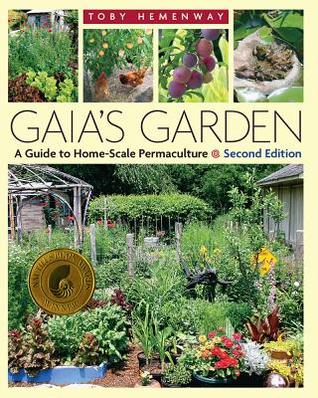
One of my goals for the next two months is to read about permaculture, and I got off to a good start with Gaia's Garden: A Guide to Home-Scale Permaculture by Toby Hemenway. This book assumes some basic gardening knowledge, and I got by fine with my very minimal experience.


Hemenway is a great writer, and I was happy to find that the book has loads of examples of practical applications rather than simply being theoretical. He focuses on how and why these techniques work rather than on selling their importance, which was refreshing. It's smart to assume that someone who picks up this book doesn't need a lot of convincing that permaculture is valid.

Here are some of the things I found particularly interesting and/or relevant to my own situation:
  • You can do amazing things with a quarter-acre suburban plot. I've been so anti-suburb, and the prevalence of lawns is a huge part of this. Not sure I'd choose to live in one, but it softens my opinion of them a lot to know that I could have a dozen fruit trees and a major abundance of other fruits and vegetables in a yard the size of my parents'.
  • Sheet mulch!!! In planning what I want to do with my own yard, I've been thinking about trying out some intensive techniques like double-digging. But I'm convinced that investing my time and energy into tracking down materials for sheet mulching rather than digging and digging is ultimately a much better option. 
  • Keyhole beds are a smart way to save space in small yards - or even around the house in big yards. Plus, they add more visual interest through contour, compared to a bunch of rectangular raised beds (although I do love the orderliness of those).
  • Dandelions are actually excellent plants. Their long tap roots pulls nutrients from deep in the ground and concentrates them in their leaves. Nutritious to eat, plus excellent for compost. They help turn crappy soil into great soil. Same goes for burdock, which Aaron furiously and angrily eradicated from our backyard last year - and we took all the greens to the city compost in fear that composting them at home would somehow lead to a massive invasion of them all over the yard. Lesson learned.
  • Re-using graywater in the garden saves a lot of energy. It's not hard at all to wash dishes in a tub and dump the water into the garden beds. Could even route the washing machine to drain into a barrel outside and use that to drip-irrigate a dry spot.
  • Nitrogen fixers are very important. I already love peas and beans (so, so much), but I'm convinced to plant them among all my other plants instead of keeping them to their own beds. Hemenway argues that even while the nitrogen-fixers are alive, they're sharing the nitrogen they took from the air with the surrounding soil and plants as their roots grow and die in response to levels of water. This is also another excellent reason to finally plant my favorite perennial: lupines.
  • Guilds are amazing. By planting in proximity a variety of things that serve a variety of purposes and interact with each other to mutual benefit, you can greatly increase yields - compared to relegating each type of plant to its own bed. The classic and ideal example of a guild is the three sisters: corn, beans, squash. The corn grows tall and supports the beans that crawl upwards, the beans take nitrogen out of the air and share it with the corn and squash, and the squash acts as a living mulch to shade the soil and help retain moisture. The book gave me a lot of good ideas for how to plant my sour cherry tree(s) with a bunch of other plants that will help each other out, and I generally plan to interplant as much as possible.
  • Taking the time to observe what's going on before leaping to conclusions about how to fix or maximize anything is really important. Also, action might be more important than planning. For me, anyway. It'd be one thing if I were attempting to transform the entire yard in one season. But I don't have the resources to do that. Instead, I'll build slowly and watch how things work as I go. 
  • Chickens can be a valuable addition to a yard for reasons well beyond their eggs. You can make a moveable enclosure for them so they can help prep beds - by eating weeds, scratching and tilling, and pooping. Plus they're an efficient composting system. Saint Paul stupidly prohibits composting soiled chicken litter, but in this I'd be more inclined to follow ethics than law.
  • Urban gardens can be really successful, especially if you think beyond your own yard and share widely with neighbors. This could be challenging on my block, where we can't even get together to hire a plow for our alley, but I think pushing myself to be more social with my neighbors will have a lot of benefits. Starting by offering something - tomatoes, lettuce, zucchini, beans, whatever - will feel more natural than just trying to strike up a conversation (painfully awkward for me). 
There's so much more useful information in the book, but I just wanted to highlight these to give some order to the mass of thoughts whirling around in my head. I'll share more of what I learn as I read more, spend some real time observing, and put plans into action.